
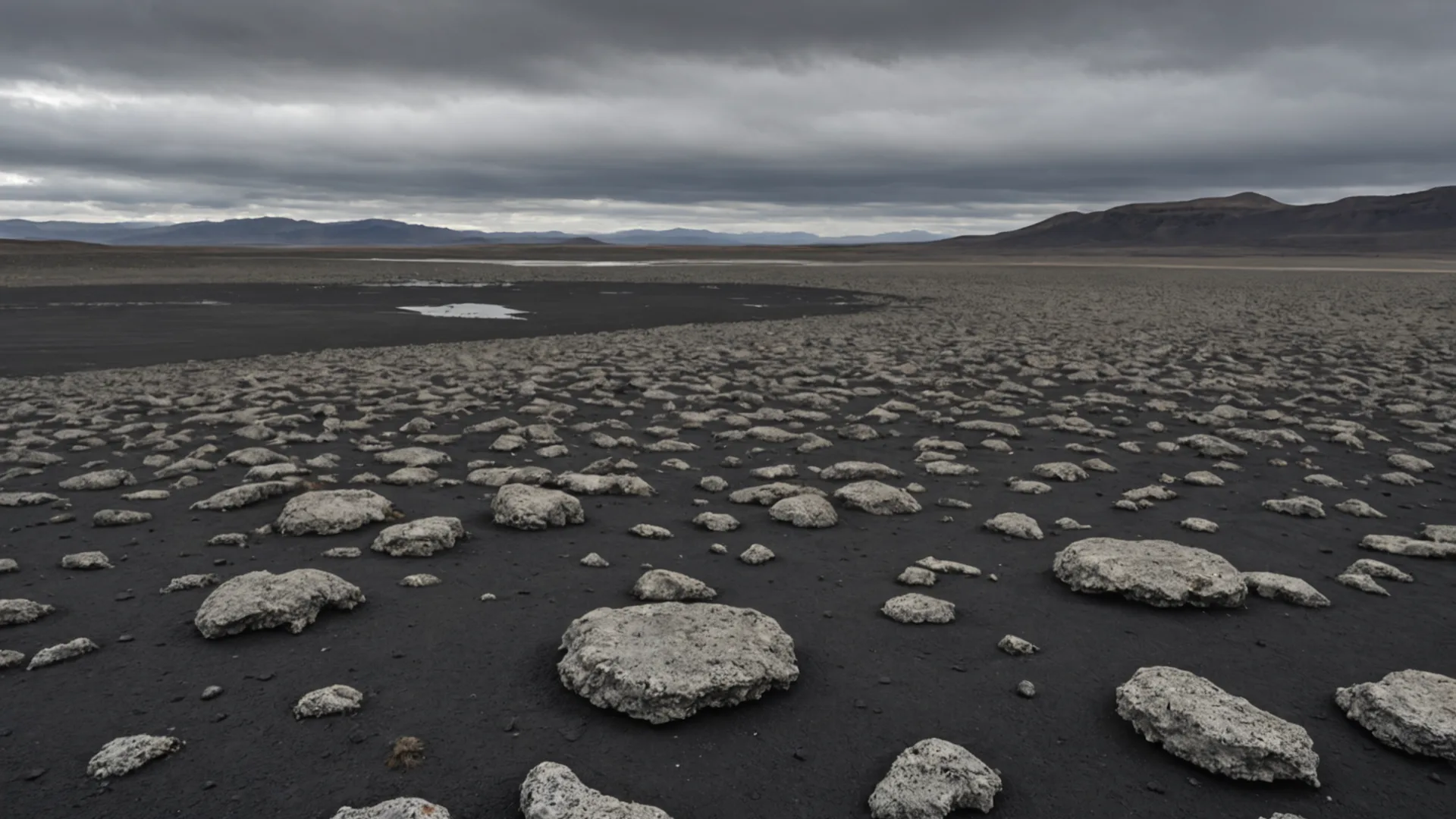
Extremophiles from the edge of the world, decoded with AI
Patagonian soils are among the harshest on earth. The microbes that survive there carry molecular adaptations that translate directly into crop resilience.
From Field Collection to Candidate Shortlist
Five structured steps from a soil core in a Patagonian laguna to a strain worth putting into a greenhouse assay.
Field Collection
Soil cores from three extreme-environment contexts: salt flat edges, frost-prone volcanic steppe, and hypersaline lagunas across Patagonia. Each site is chosen because its conditions replicate the agricultural stress we are trying to address.
Microbial Isolation
Selective culture media matched to the target stress conditions. We isolate colonies that demonstrate growth under salt and cold pressure, not just survival. Each isolate is catalogued and assigned an internal identifier.
AI Genomic Scoring
Whole-genome sequencing followed by our scoring platform. The platform queries gene family databases for halotolerance gene clusters, cold-shock protein induction pathways, and ACC deaminase activity markers. Thousands of isolates narrowed to dozens of candidates.
Stress Chamber Assays
Shortlisted strains applied to seedlings in controlled stress chambers. Saline irrigation for salt-stress candidates; controlled temperature drops for cold-stress candidates. We measure germination rate, root development, and chlorophyll retention against untreated controls.
Candidate Shortlist
Strains that demonstrate consistent, reproducible crop benefit across multiple assay runs advance to greenhouse validation. The candidate shortlist is small on purpose: we are selecting for reliable mechanism, not breadth.
What the AI Does in Our Screening Pipeline
The platform handles the search problem that makes manual screening impractical: querying across thousands of isolate genomes to surface candidates that would otherwise stay hidden in the noise.
Gene Family Queries
The platform runs queries against curated gene family databases to identify halotolerance clusters, osmotic adjustment pathways, and cold-shock protein gene sets across the full isolate genome catalog.
Stress-Tolerance Scoring
Each isolate receives a composite score based on the number and completeness of relevant stress-tolerance gene families present. Scores prioritize completeness of a pathway, not just presence of a marker gene.
Candidate Ranking
Isolates are ranked against each other and against a reference set of known biostimulant organisms. The output is a shortlist of candidates most likely to demonstrate measurable crop benefit under the target stress condition.
Where We Sample: Patagonian Extreme Environments
Each environment type is selected because the stresses it imposes correspond to agricultural stress conditions in active grain-growing regions.
Salt Flat Edges
Microbial communities at the soil-salt flat interface experience chronic osmotic pressure. These environments select strongly for organisms with active osmotic adjustment mechanisms rather than passive tolerators.
Frost-Prone Volcanic Steppe
High-altitude volcanic plateau soils with frequent sub-zero events and rapid temperature fluctuation. Organisms here carry cold-shock protein and membrane-fluidity adaptation that matches conditions during crop seedling emergence.
Hypersaline Lagunas
Seasonal hypersaline lake margins where communities face both salt concentration and temperature extremes. A productive source for candidates targeting the combined salinity-drought stress increasingly common in irrigated landscapes.
See What Came Out of the Pipeline
The methodology above produced three active candidates. Their current development stage, crop focus, and mechanism detail are in the pipeline overview.